Client: Drill Floor Crane Safety
Platform: ALBA Platform
Application: Drill Floor Crane Safety
Background
On the Stena Evolution drillship, both the AFT and FWD foldable arm cranes on the drill floor presented a collision hazard to the Hydra-Racker — an automated pipe-handling machine. Due to the drill floor layout and the absence of any position feedback from the cranes, the driller had no visibility of whether a crane arm was in a position where it could be struck by the fast-moving Hydra-Racker. Following a near-miss incident, Stena Drilling approached RCP to design, manufacture, and deploy a dedicated Collision Warning System (CWS) as a new layer of safety on the drill floor.
Challenges
The drill floor environment of the Stena Evolution presented a series of compounding constraints that ruled out a conventional wired installation from the outset:
- Cable runs across the dual derrick drill floor were estimated at upwards of 100m, with no suitable routing path available without rope access technicians or scaffolding — significantly increasing planning complexity and cost for what would otherwise be a relatively straightforward system.
- The cranes’ existing service loops had no spare cores. As moveable equipment, any new cabling would need to pass through slip-rings and service umbilicals, and adding a new service loop would have required crane disassembly on-site — introducing substantial cost and making a wired approach non-viable.
Beyond cabling, the system had to monitor two cranes simultaneously without signal overlap or data confusion, interface with the existing foldable crane arms without affecting operation, and be engineered to suit a newly built drillship with its own electrical installation standard. Stena also required the system to be delivered fully ready to install — with all mounting brackets and fixing solutions resolved prior to mobilisation.
Solution: Wireless Proximity Detection
Eliminating cable routing risk through certified hazardous area RF communication
Before any design work began, an RCP engineer was mobilised to the vessel to complete a detailed on-site survey. The survey captured drill floor layout, crane movement patterns, available mounting locations, cable routing options, and the vessel’s electrical installation standard — providing the foundation for the entire design.
To eliminate the cable routing problem entirely, RCP designed the CWS around wireless intrinsically safe proximity detectors operating at 868.3MHz. Two sensors per crane monitor slew and arm position, with proximity states transmitted to a receiver mounted on the drill floor. The receiver is housed in an Ex ‘d’ rated enclosure and coupled to a high-gain antenna (3.5dBi) via certified intrinsically safe antenna couplers, allowing the system to operate safely in Hazardous Area Zone 1 without long cable runs. The system was designed in compliance with:
- Ex e (IEC 60079-7), Ex d (IEC 60079-1), Ex i (IEC 60079-11)
- Installation and inspection per IEC 60079-14
To ensure reliable communication across a congested metal environment, RCP conducted a line-of-sight survey prior to design and selected the 868.3MHz frequency band for its superior signal penetration compared to higher-frequency alternatives. Internal acceptance testing confirmed robust RF communications up to 100m with heavy obstructions present. The AFT and FWD crane networks were separated — each with its own antenna, receiver, and sensor transmitters — to prevent signal overlap and increase overall reliability. The receiver hardware is capable of distinguishing up to 40 individual transmitters.
The control logic was implemented as fail-safe: if either the slew or arm position sensor loses sight of its target, a hazard condition is immediately assumed. A check pulse transmitted every 2.2 seconds provides an additional layer of assurance — if the receiver does not detect this pulse, the crane is assumed to be in a hazard position and an alarm is raised.7
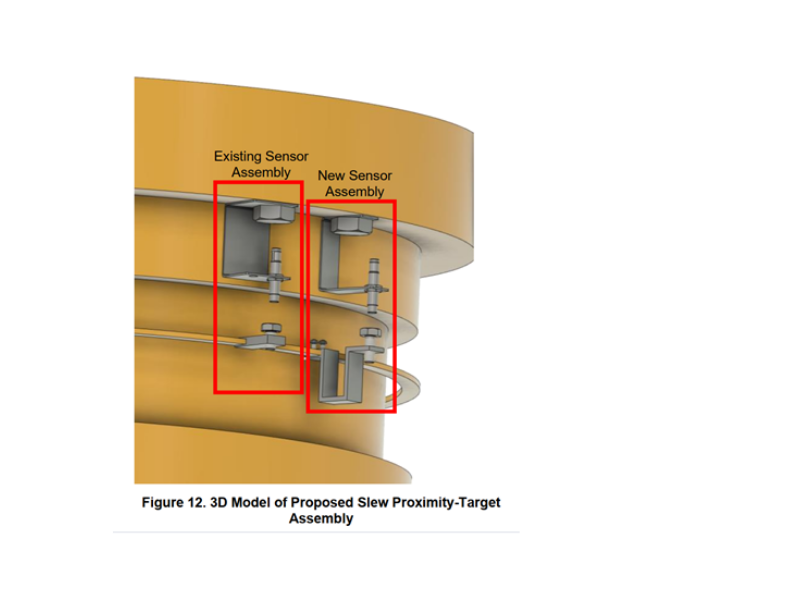
Sensor mounting positions were confirmed using a 3D model of the existing crane infrastructure, allowing RCP to design custom brackets that would not interfere with existing crane equipment. The brackets were manufactured using CNC machining, bending, and laser cutting, and all equipment configuration was prepared strictly in accordance with the vessel’s installation standard. An installation work pack was prepared and approved by Stena’s engineers prior to mobilisation.
Outcome
Installation and commissioning were completed one week ahead of schedule, with the rig remaining fully operational throughout. No issues were encountered during installation, testing, or commissioning — an outcome RCP attributes directly to the thoroughness of the survey and design phases.
The wireless approach eliminated the need for rope access or scaffolding, avoided the requirement to disassemble the cranes for service loop modifications, and reduced installation complexity significantly compared to a cabled solution. The Stena Evolution’s HSE advisor confirmed that the system provides drillers with real-time visibility of crane arm positions through the HMI and audible alarms, supporting the crew in mitigating collision risk on the drill floor. The system remains operational, with the client actively maintaining it.
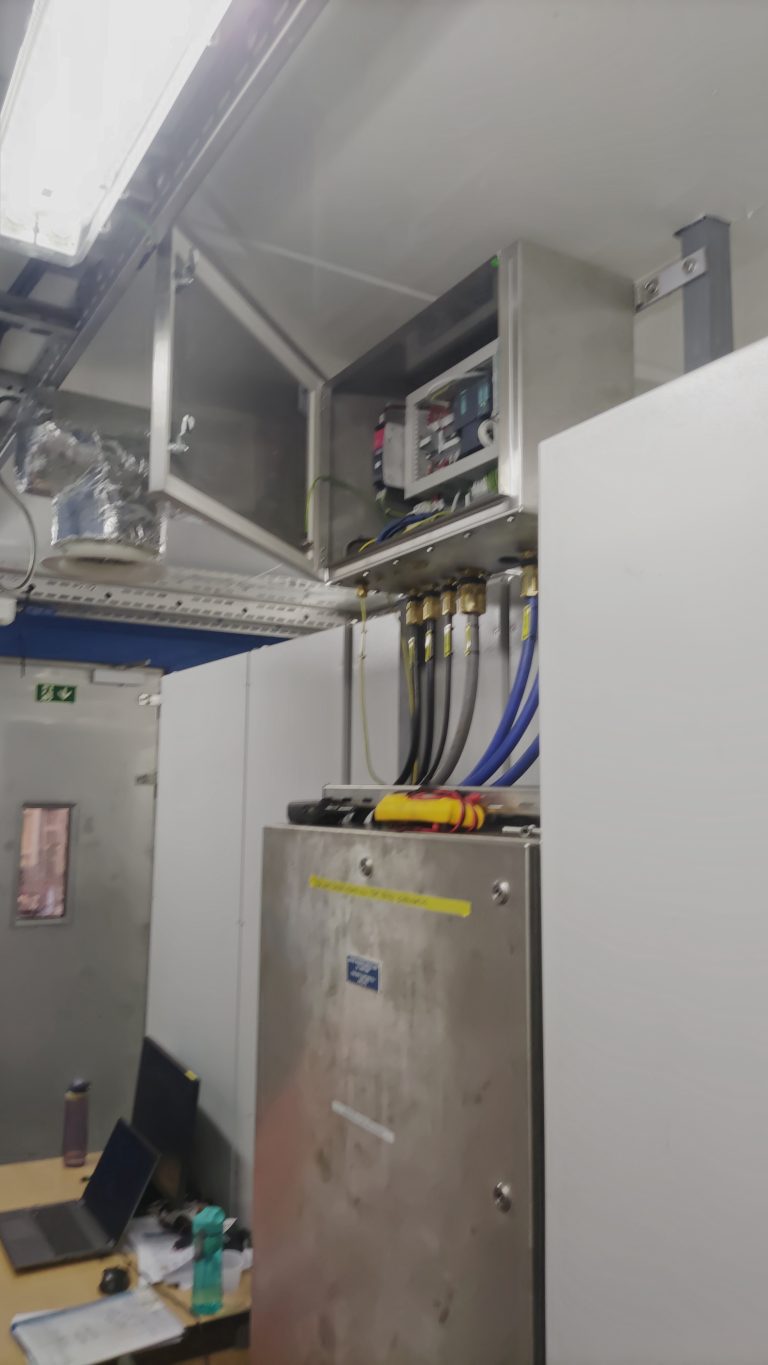
Collision Warning System Controller
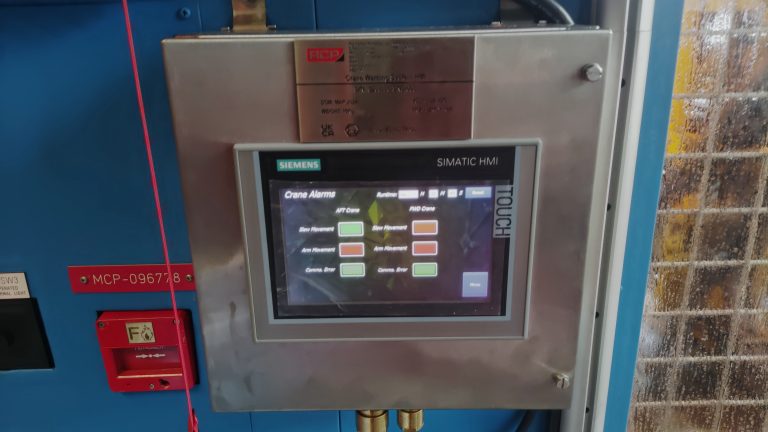
Collision Warning System HMI
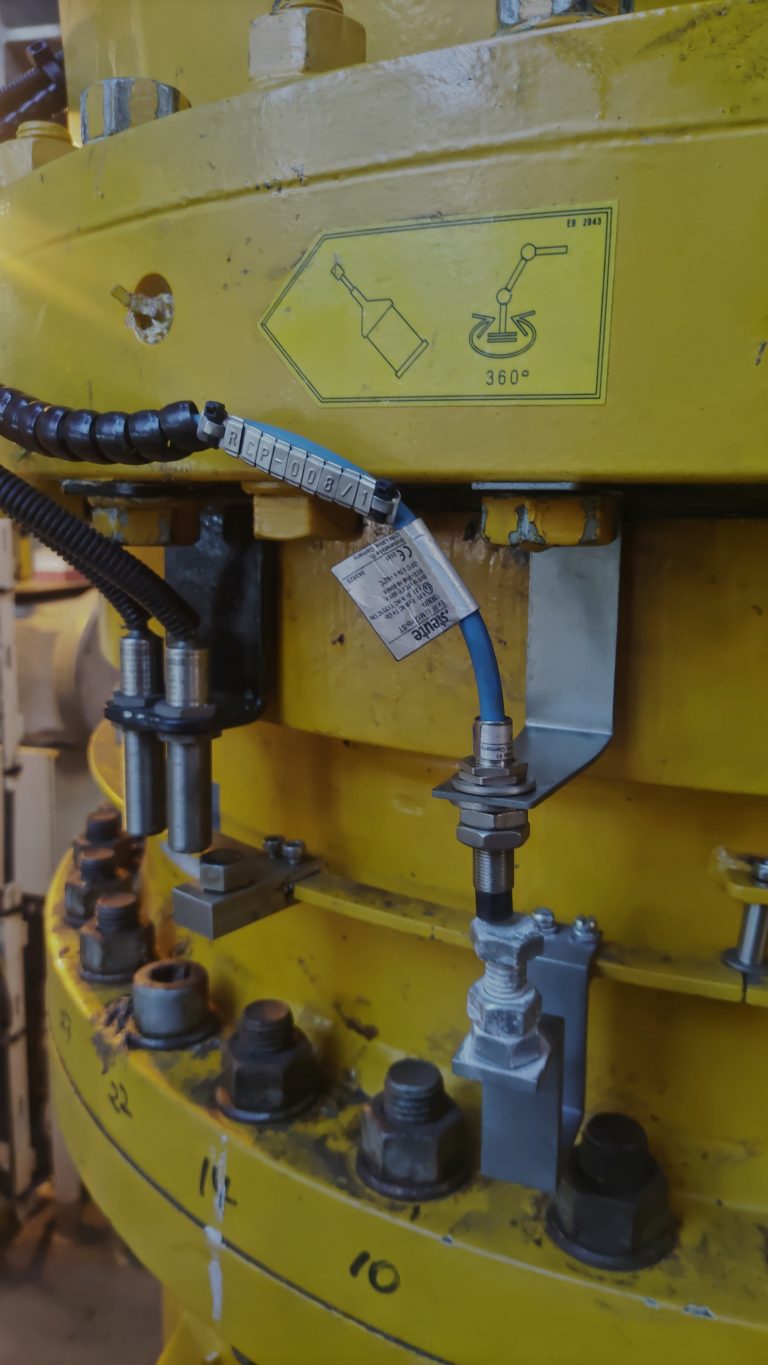
Collision Warning System HMI Slew Sensor
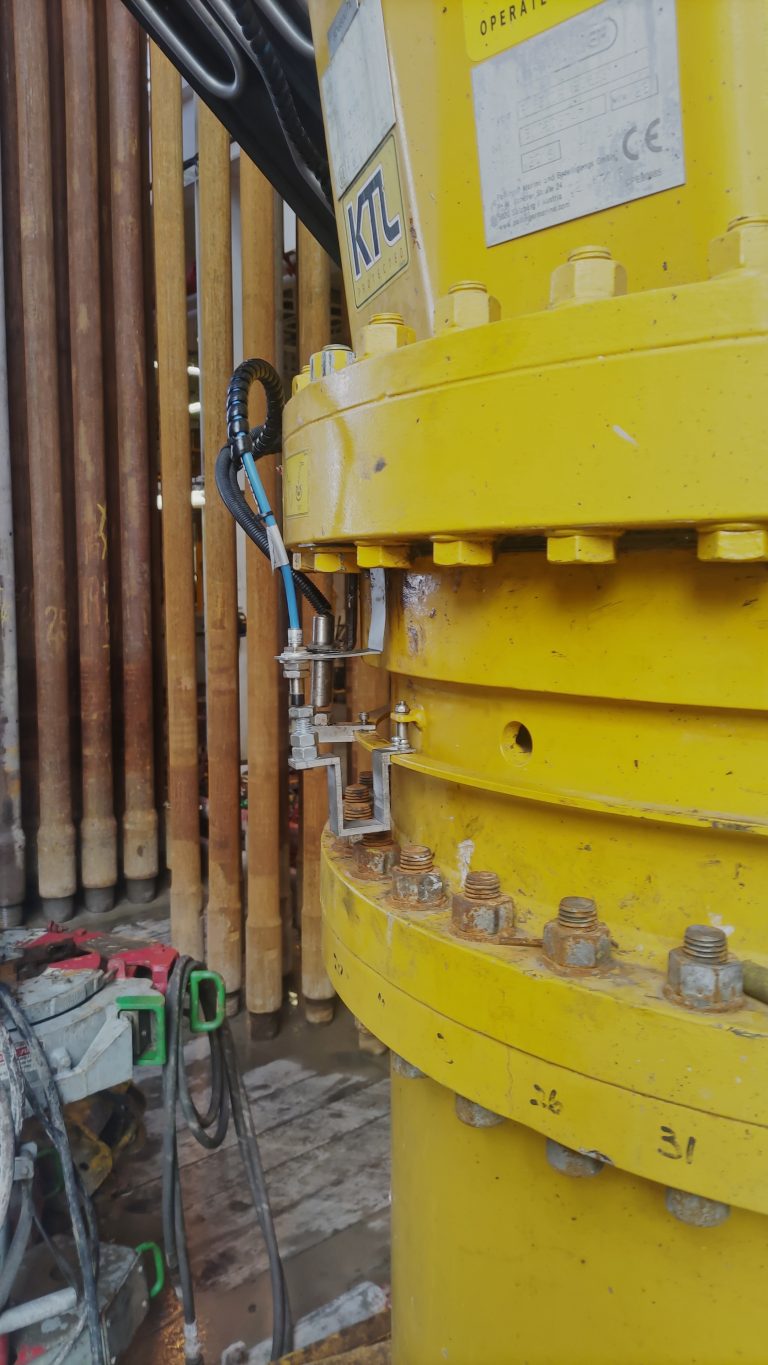
Collision Warning System HMI Slew Sensor
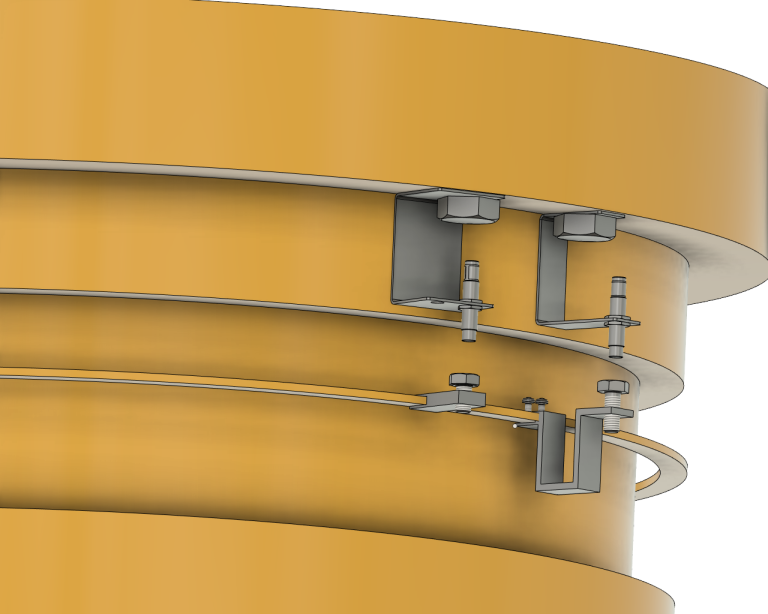
Collision Warning System Slew Target 3D Model
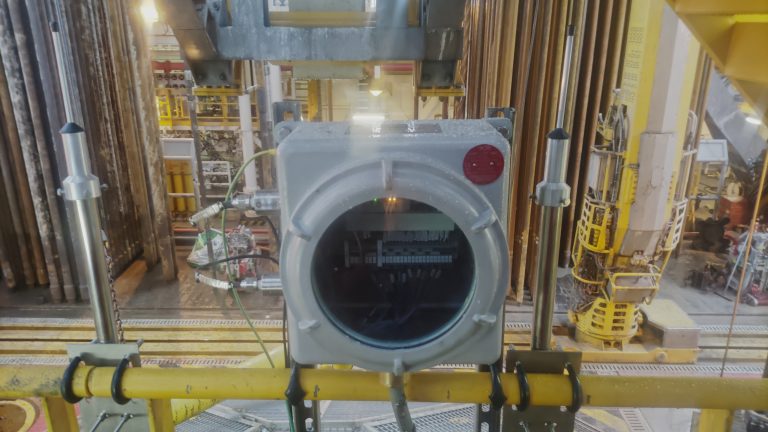
Collision Warning System Wireless Receiver Antennae
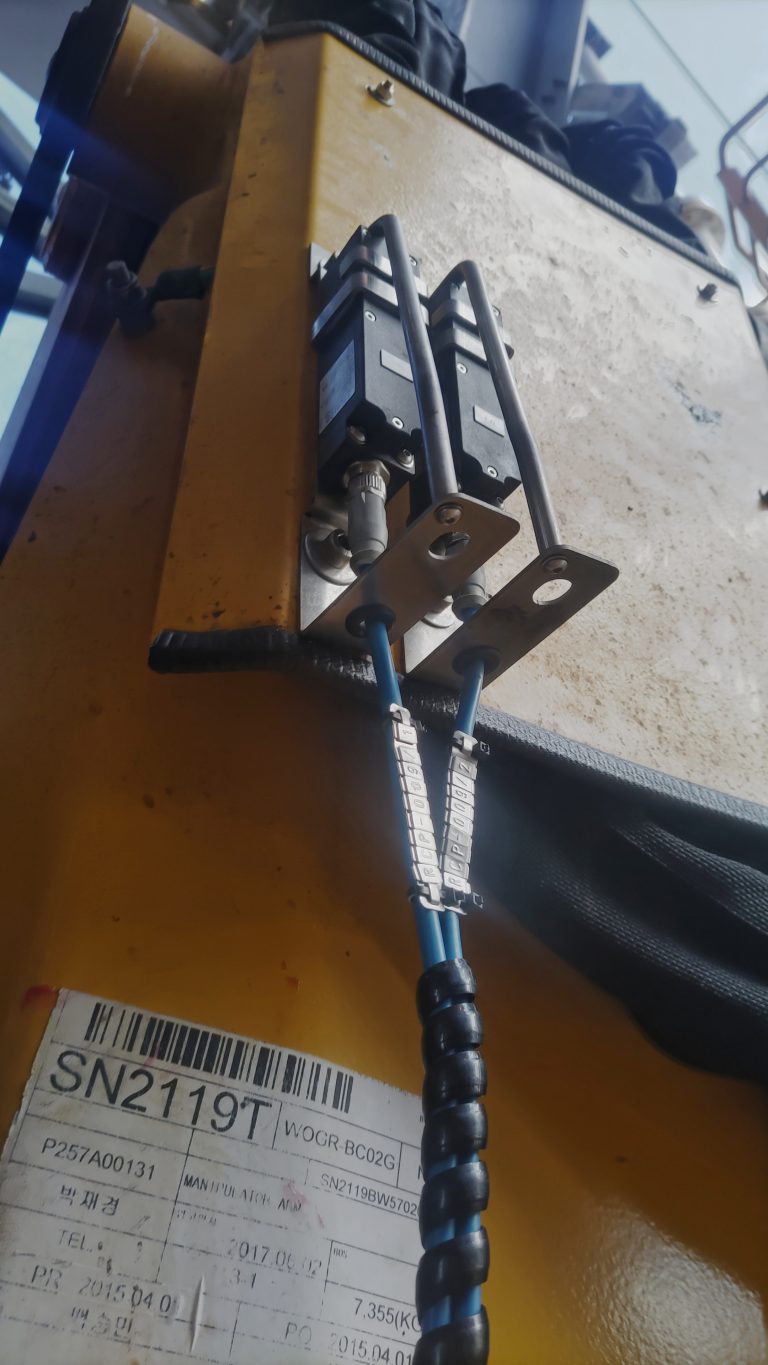
Collision Warning System Wireless Transmitters