Client: CNR International
Application: Electrical Isolator Handle Assembly
Electrical isolator assemblies rely on a handle-shaft coupler to transmit rotational force from the operator handle to the main isolator shaft. CNR’s OEM couplers were fabricated from a material prone to plastic deformation — when the main shaft experienced sticking, the coupler would deform under load rather than transmit torque, decoupling the handle from the shaft and rendering the isolator inoperable. The failure mode required replacement of the full isolator handle assembly each time it occurred.
CNR’s previous approach was to source complete replacement assemblies, but when RCP proposed manufacturing the couplers directly using additive manufacturing, CNR identified it as a more economical alternative. RCP was tasked with replicating the coupler geometry and re-engineering the component in a material capable of withstanding the torsional loads associated with a sticking shaft — with the objective of extending service life beyond that of the original OEM part.
Challenges
Replicating the OEM coupler was not a straightforward copy exercise. The component’s geometry presented several interdependent constraints that had to be satisfied simultaneously:
- A longitudinal slit across the coupler body allowed the part to compress and grip the main shaft — this flexibility had to be replicated exactly in the replacement to ensure secure seating under load.
- Two opposing extrusions, each 2mm wide, mated the coupler to the handle and required dimensional accuracy within 0.2mm — a tolerance that is difficult to achieve consistently with additive manufacturing, necessitating multiple prototype iterations
Shaft centring was equally critical. The isolator operates through rotational motion, meaning any misalignment risked the handle binding completely or the isolator failing to function. The replacement had to match the centring performance of the original part while also being manufacturable at a unit cost that made it a viable alternative to full OEM assembly replacement.
Solution
Reverse Engineering and Additive Manufacturing
RCP engineers obtained the original isolator handle and OEM coupler from CNR for direct examination. Dimensions were captured manually using callipers, providing the precise measurements required to build an accurate 3D model of the replacement coupler. Material selection was driven by the failure mode of the original part — RCP specified a premium carbon fibre reinforced nylon filament, chosen for its superior tensile strength and wear resistance, directly targeting the plastic deformation failure that had been occurring in service.
With the model and material confirmed, multiple proof-of-concept couplers were printed to refine process parameters and validate the extrusion geometry. Validation included:
- Test-fitting against the original equipment handle provided by CNR
- Torque testing using standard 7mm square shafts, confirming sufficient rotational force to operate the isolator shaft
- Failure testing on the manufactured inserts, confirming the new couplers required substantially greater torque to deform than the original OEM parts
Once the design was locked, five production units were manufactured within a matter of hours.
Outcome
Client feedback confirmed the parts performed as required in service, and based on material testing and failure analysis, the replacement couplers are estimated to offer improved durability and service life compared to the original OEM components. The full manufacturing process — including material preparation conditions, 3D design files, and printing configuration — was documented to ensure repeat units can be produced to closely matching tolerances.
CNR subsequently placed a repeat order for five units of a reduced-size variant for a similar isolator handle type, confirming both the solution’s suitability and RCP’s capability to support ongoing spare parts requirements at short notice.
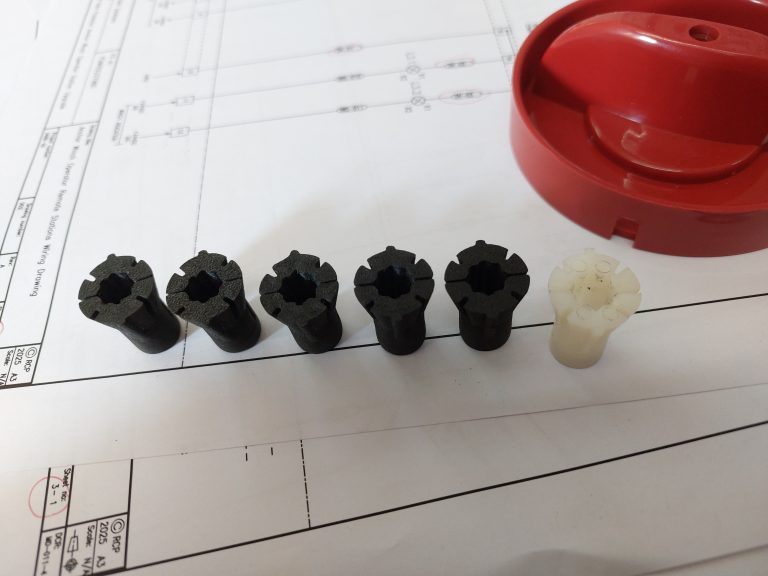
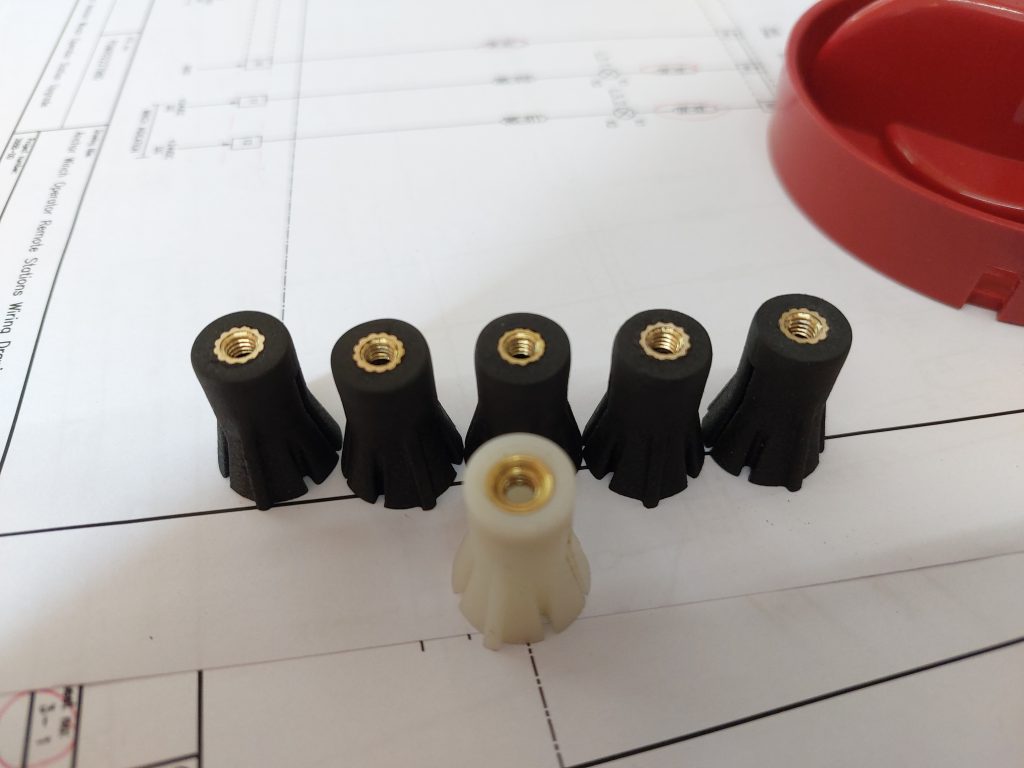
3D Printed Isolator Inserts (black) and Original Isolator Insert (white)
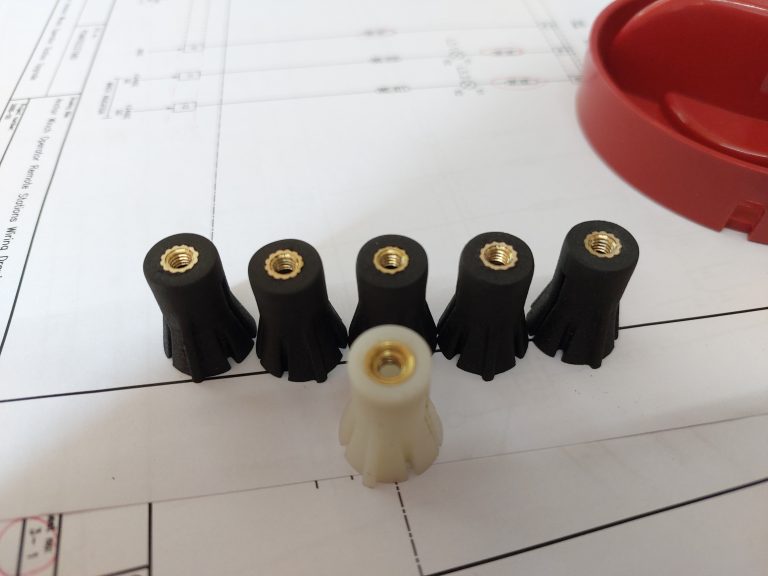
3D Printed Isolator Inserts (black) and Original Isolator Insert (white)
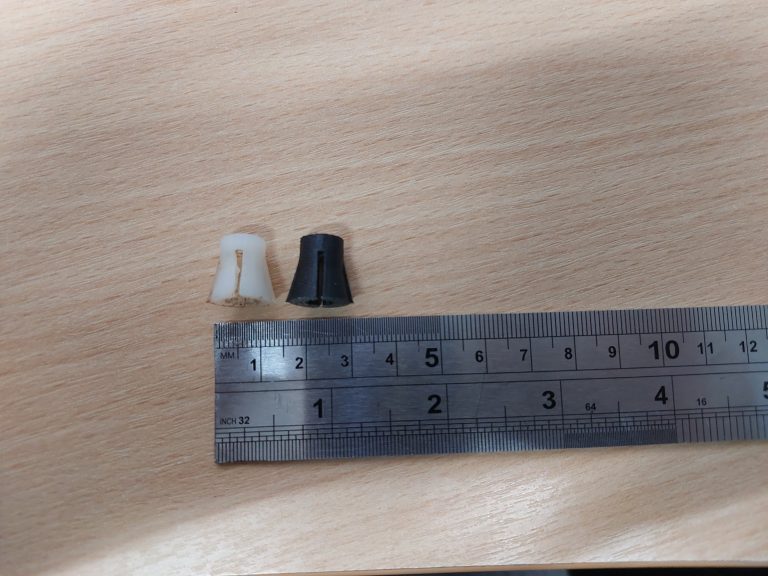
3D Printed Isolator Inserts (black) with the Original Inserts (white) – Smaller Isolator Version
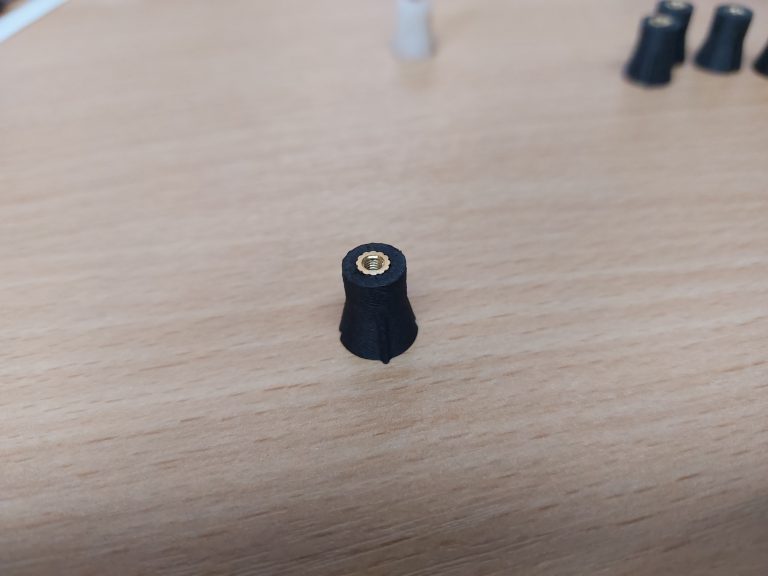
3D Printed Isolator Inserts for the Smaller Isolator Version
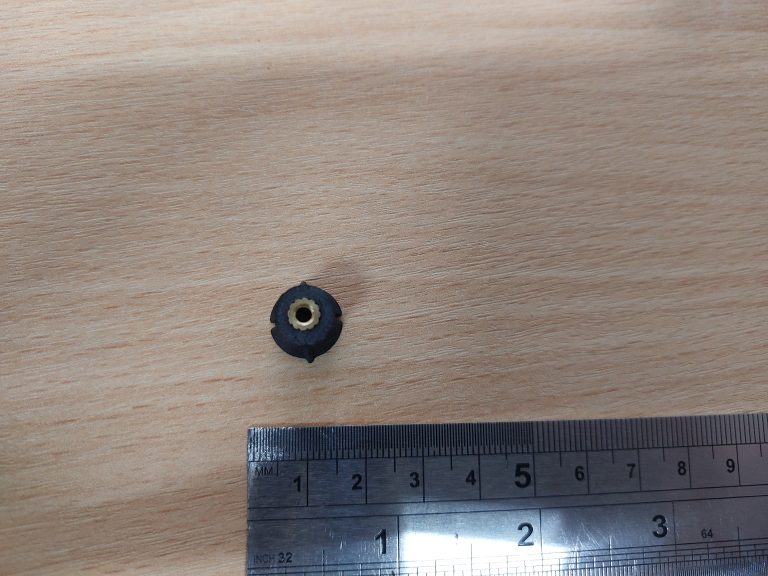
3D Printed Isolator Inserts for the Smaller Isolator Version
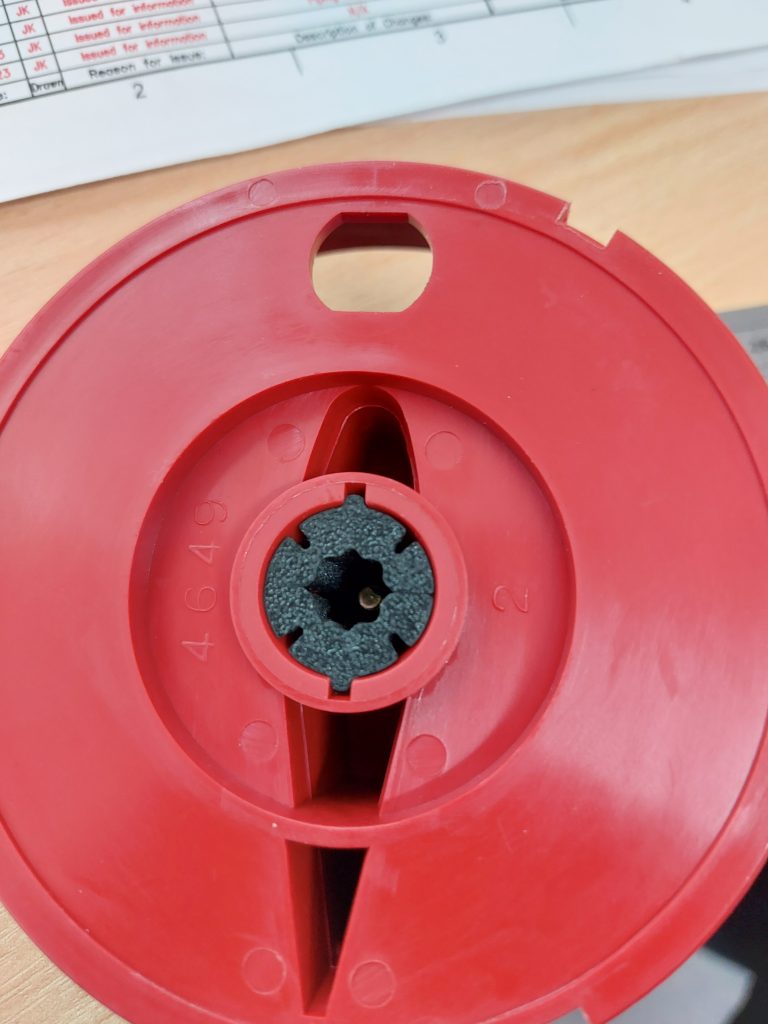
Large Isolator Handle with the 3D printed Insert
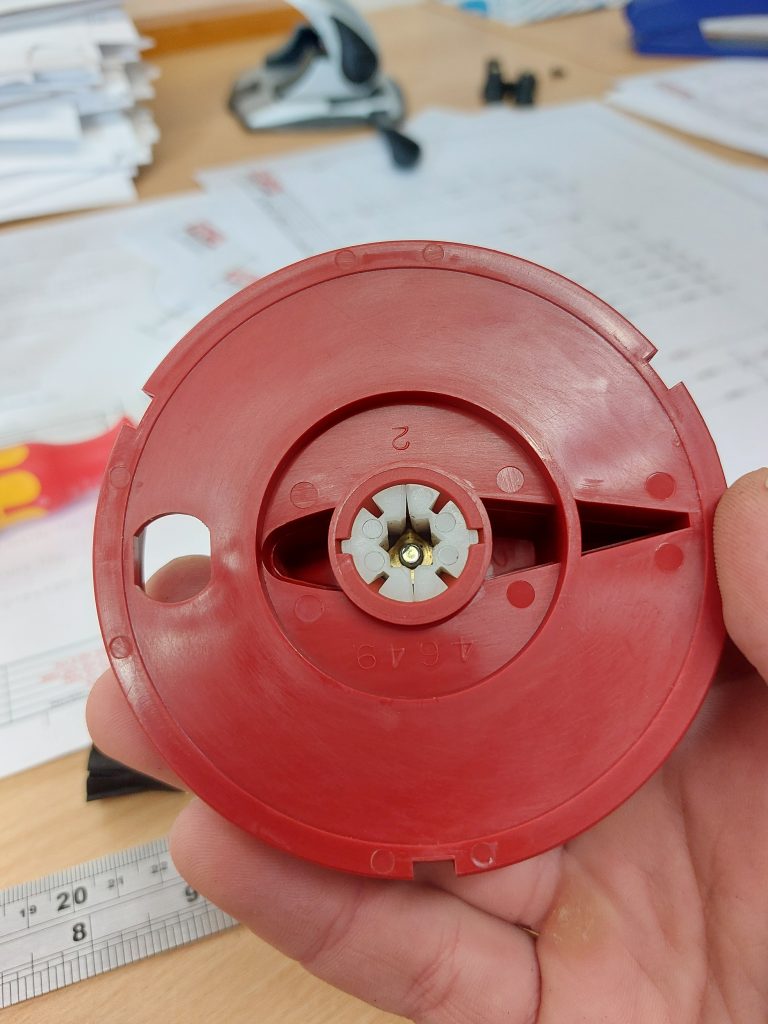
Large Isolator Handle with the original Insert
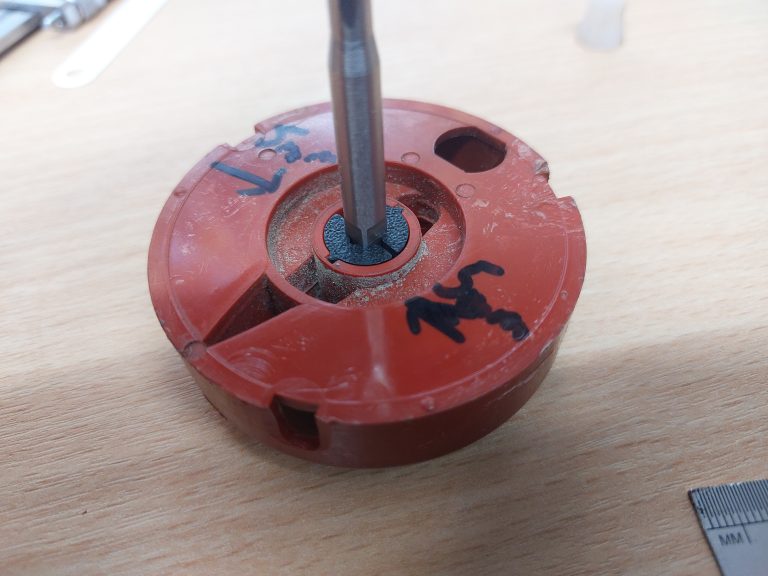
Smaller Isolator Handle with 3D Printed Insert