Client: Archer
Platform: ALBA Platform
Application: Anti-Collision System & Hydraulic Power Unit Control
The project required complete reverse engineering of the control system without software comments or documentation, demanding ground-up analysis while maintaining HPU control pedestal integration. Severe space constraints necessitated an innovative hinged double backplate design to fit the new controller within the existing footprint whilst preserving all interfaces and IEC/BS 60079 hazardous area compliance. An aggressive timeline compressed the standard four-week installation to just two weeks, requiring three RCP engineers working round-the-clock shifts. Critical control philosophy differences between the HPU spring brake (1-second delay) and typical TBM brakes (0.5-second delay) required extensive parameter tuning during commissioning alongside multiple clutch/brake interlocks and safety scenarios.
Combined TBM/HPU Controller System
From Software Reverse-Engineering to Site Acceptance Testing
Software Development
RCP reverse-engineered the complete Lidan software and rewrote it in TIA Portal for the S7-1500 platform, minimizing future obsolescence risk through migration to a modern, long-term supported control system.
During third-party inspection, a critical clutch-brake actuation delay requirement was identified. RCP implemented a 0.5-second delay between brake engagement and de-clutching to prevent drawworks motor stalling, with modifications validated through client-witnessed FAT at the RCP Blackburn facility.
System Capabilities
The TBM constantly monitors the travelling block position, speed and hookload to safeguard the block/Top Drive against high speed collision with the rig floor or the derrick crown. The innovative TBM operation allows for smooth breaking profile protecting the hoisting equipment from “birds nesting” and other acceleration related failures.
TBM acts as another layer of safety in case of Elmagco brake failure during block downward operation, if TBM does not detect sufficient brake current when required, main brake it will engage the main brake minimising the risk of a free-fall collision
The TBM increases the floor personnel safety by minimising the risk of the high speed collision and it improves the operational reliability.
TBM can be easily upgraded with ACS system to further minimise collision risk between travelling block and the drilling equipment.
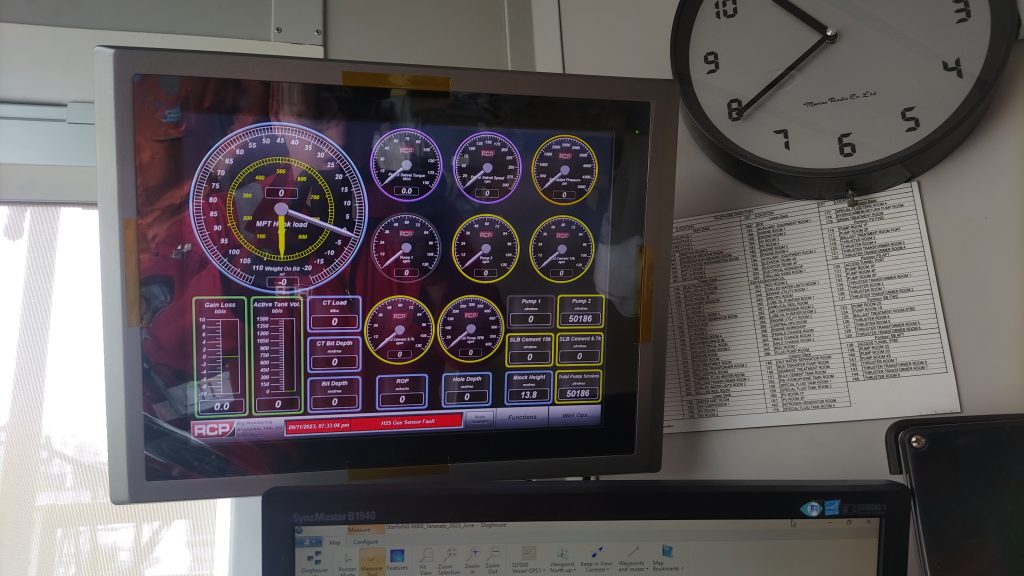
The operator HMI provides real-time monitoring of block height, speed, hookload, and brake current, with visual confirmation of safety limits and ton-miles for drilling line maintenance tracking. Operators can view, acknowledge, and clear system alarms through a dedicated alarm window, with high-precision safety limit setting at required heights.
Maintenance diagnostics include I/O interrogation for rapid fault tracing and live system observation capability. Password-protected parameter tuning restricts critical adjustments to RCP engineer access only.
A six-month rolling data logger captures all sensor data with FIFO overwrite, providing trend view functionality for operational analysis, predictive maintenance planning, and incident investigation support.
Testing & Validation
Client-witnessed Factory Acceptance Testing at RCP Blackburn used a TBM block operation simulator for full system demonstration, with separate FAT conducted for the clutch-brake delay modification.
Site Acceptance Testing comprised isolated system interfacing tests, free-fall block drop tests, and full-speed operational verification. CompEx-certified RCP engineers completed the installation and hazardous area inspection, with all new equipment certified per IEC 60079 and hazardous area register documentation compiled.
Results
Installation and commissioning were completed within the two-week window, 50% faster than the standard four-week timeline. The system has achieved zero failures since deployment, with enhanced safety through visible setpoints that minimize operational interference.
Maintainability improvements include significantly simplified fault diagnosis and troubleshooting through real-time I/O interrogation and six-month rolling data logging. The modern S7-1500 platform eliminates obsolescence risk with full manufacturer support and expandable design supporting future ACS integration for hydraulic pipe racker collision avoidance.
Key Improvements Over Legacy System
The updated RCP TBM system, provides improvements on the drawworks equipment with its innovative braking profile. If TBM interference with drilling operations is required, it is achieved in a smooth fashion avoiding, acceleration based equipment deterioration.
TBM creates additional layer of safety if the Elmagco brake fails during the downwards travel, TBM will enable the main brake automatically to avoid high speed collision.
The RCP controller replaced an obsolete system with no OEM support with a modern S7-1500 platform backed by full manufacturer support. Real-time I/O interrogation enables rapid fault diagnosis compared to the legacy system’s limited visibility, whilst six-month rolling data logging provides operational analysis capability previously unavailable. Operators now have live safety setpoint displays replacing the legacy system’s lack of feedback, and maintenance personnel access diagnostic information directly through the HMI rather than requiring PLC login. The double backplate design further simplifies component access during servicing.
The expandable architecture supports future ACS integration for auxiliary equipment, eliminating the fixed functionality limitations of the original Lidan system.
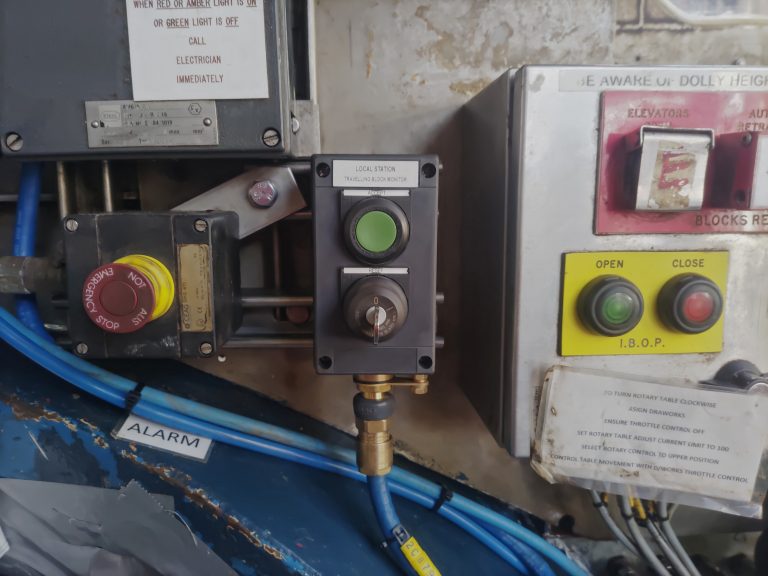
TBM Drillers Controls
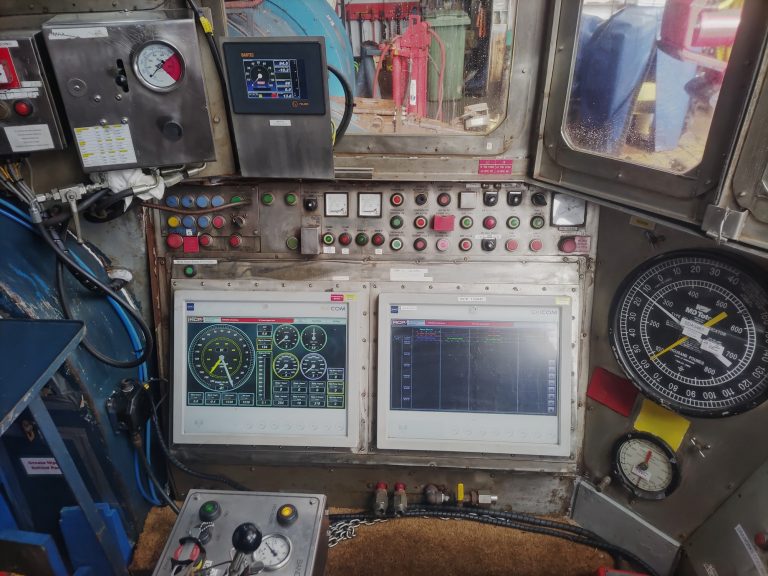
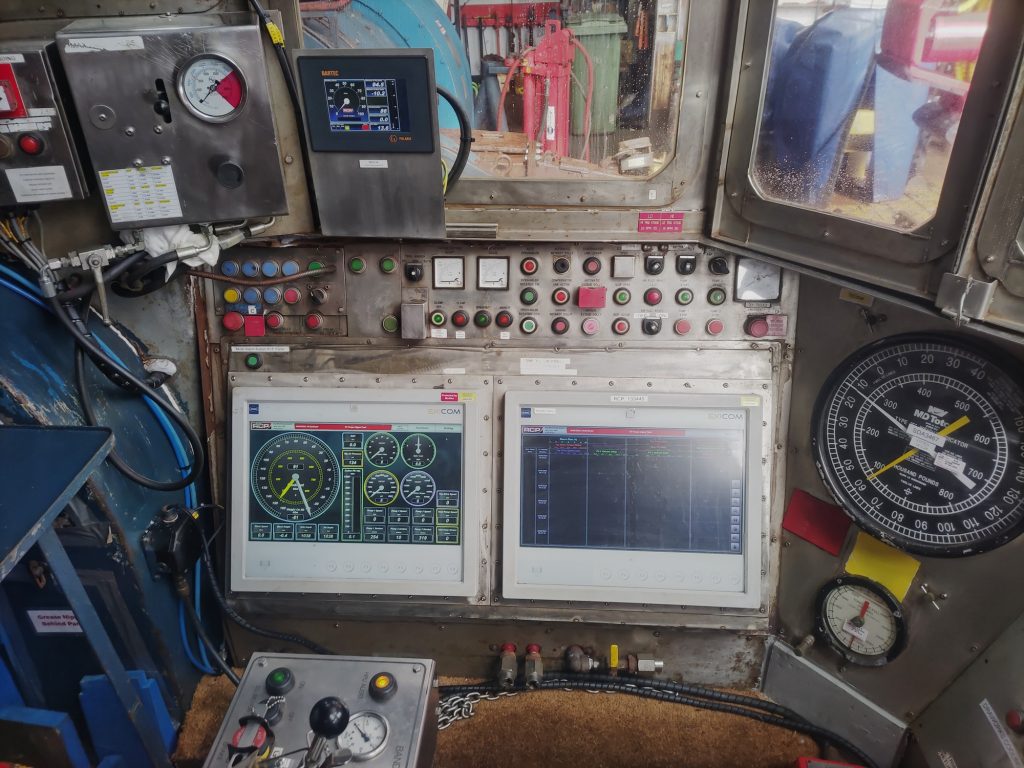
TBM (Top Left) and EDR (Two Centre Screens) Drillers HMIs
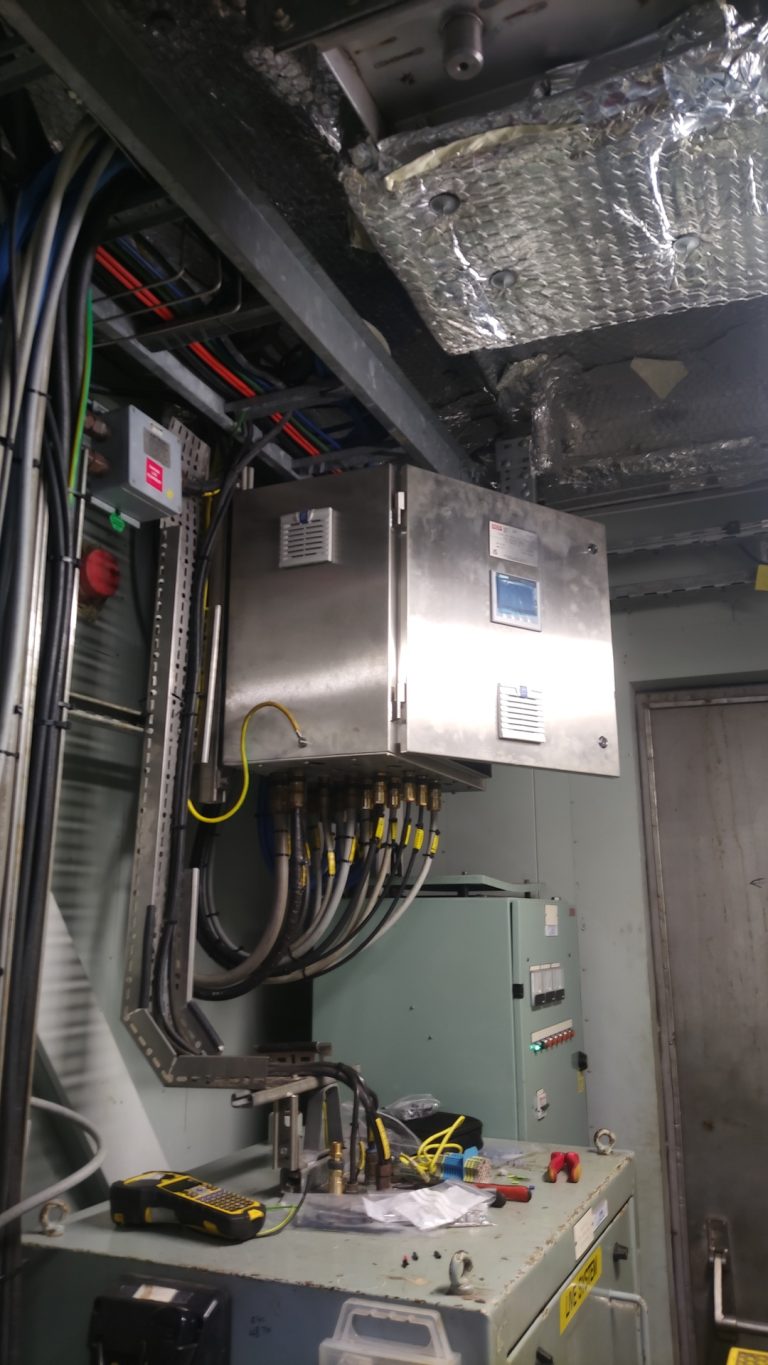
TBM Controller as Installed
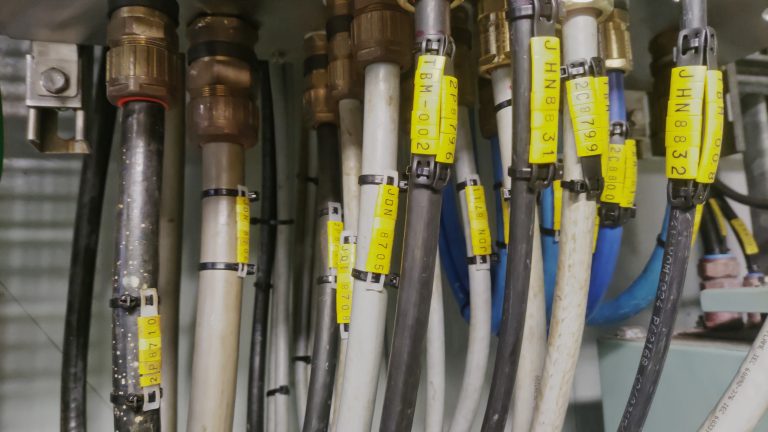
TBM Controller Cables as installed
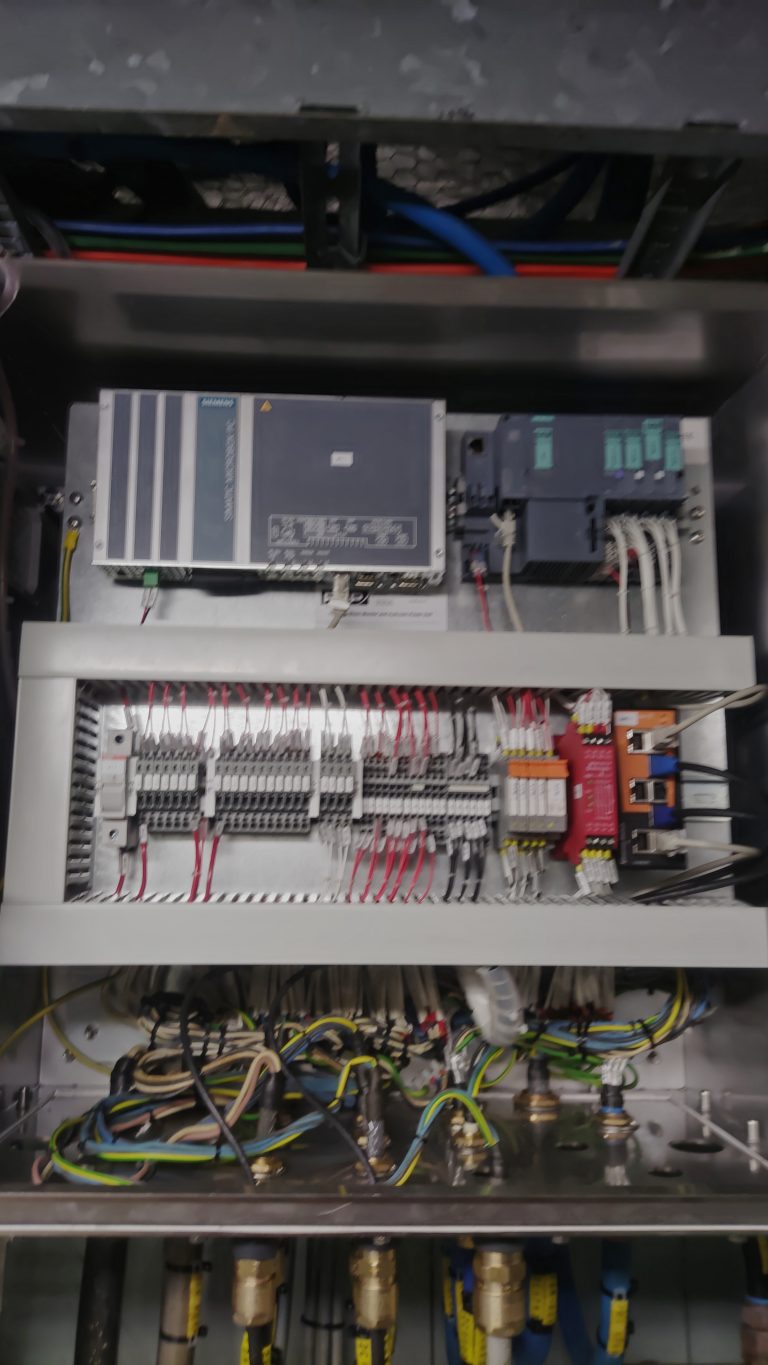
TBM Controller Front Backplate
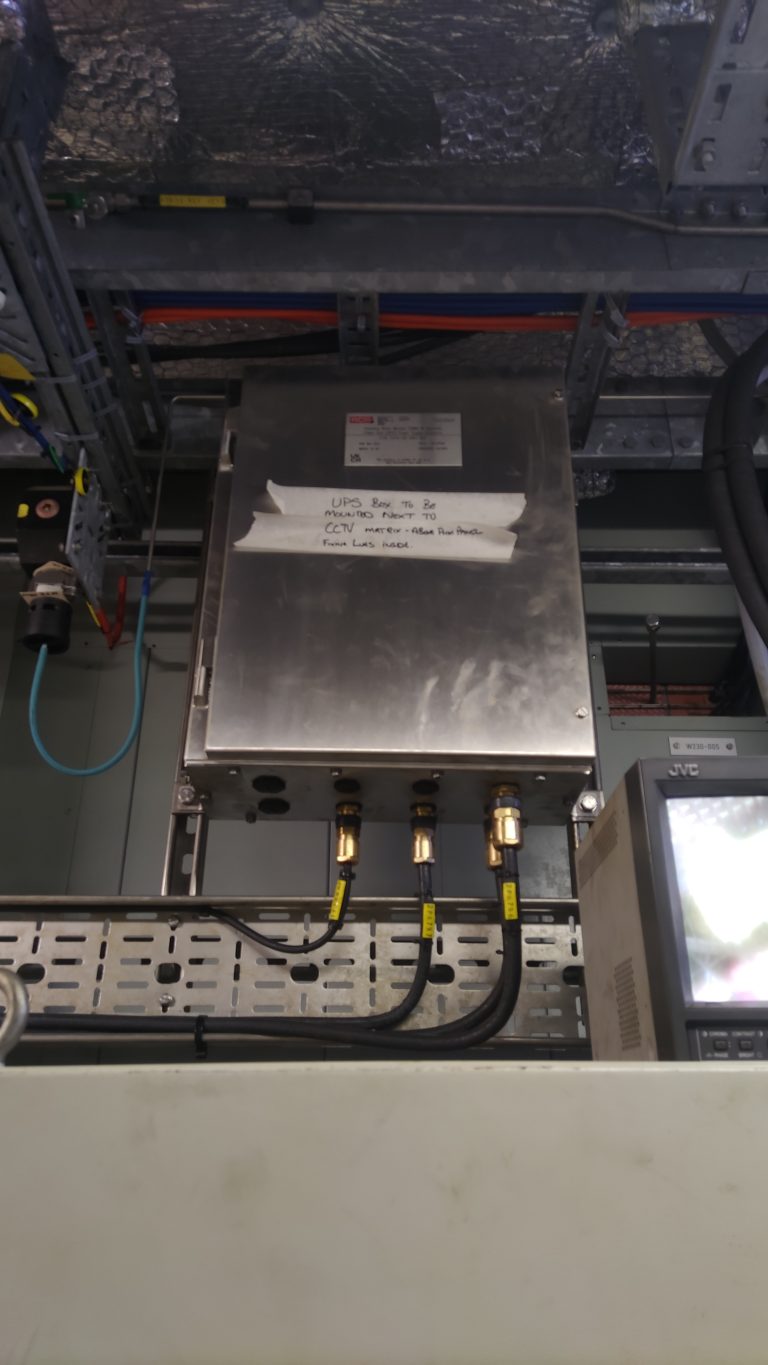
UPS as Installed
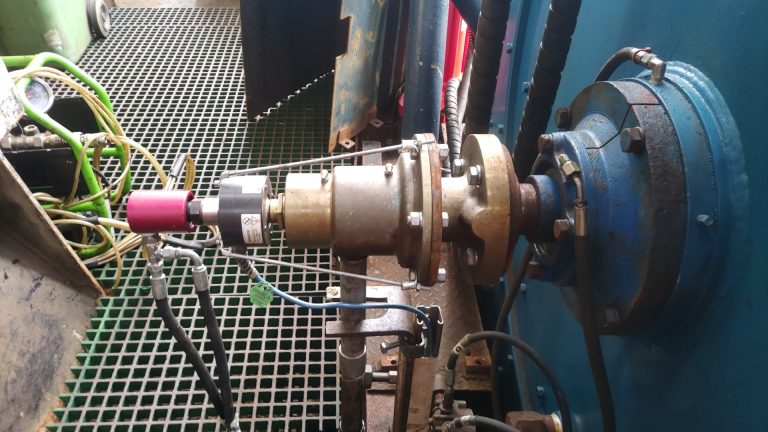
TBM Encoder
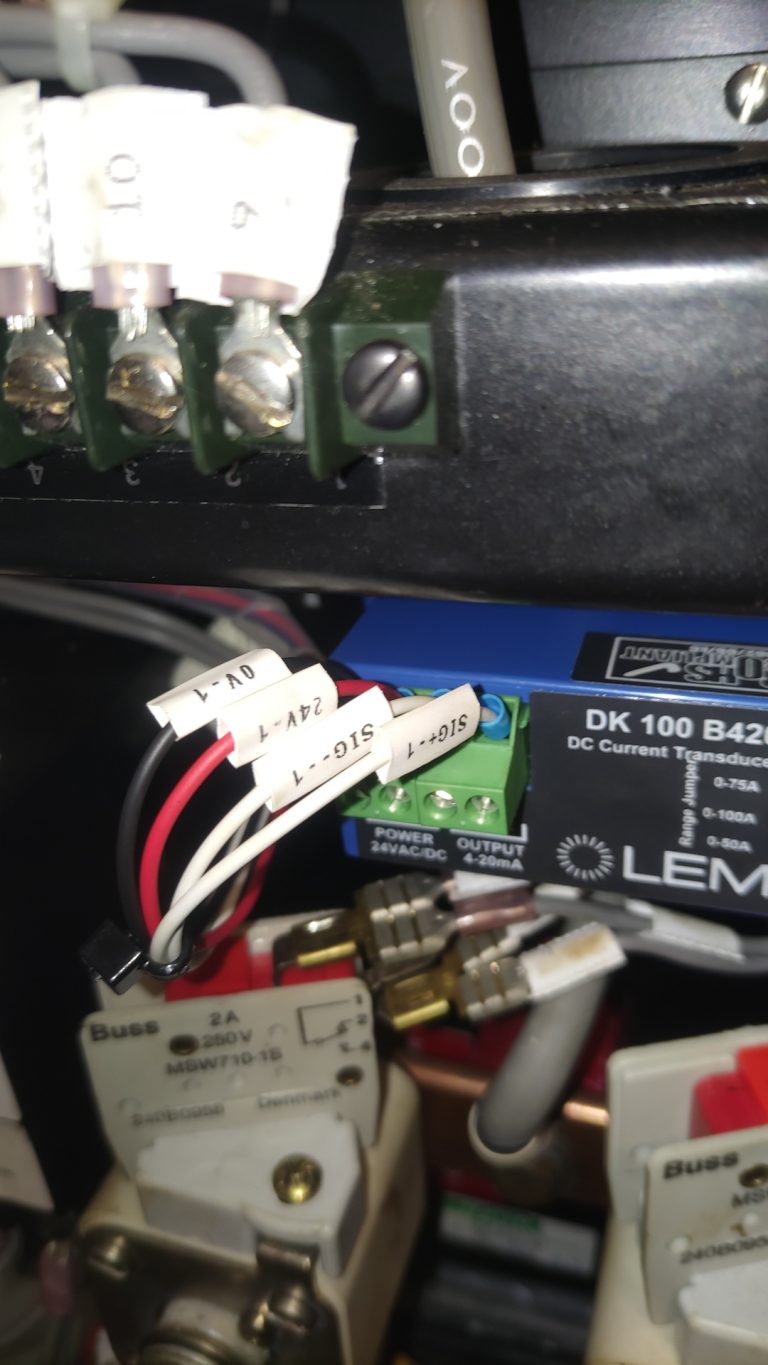
TBM HED Elmagco Tie in
Need to Replace an Obsolete Control System?
RCP specializes in reverse-engineering and modernizing obsolete drilling control systems. Our solutions maintain existing interfaces while adding enhanced safety, diagnostics, and future expandability.
Applications:
- Traveling Block Monitors
- HPU controllers
- Anti-collision systems
- Drawworks control upgrades